Pointed Pen
How Much Pressure to Use in Pointed Pen Calligraphy
Learn exactly how much pressure to use in pointed pen calligraphy, from feather-light upstrokes to controlled downstroke flex. A beginner's practical guide.
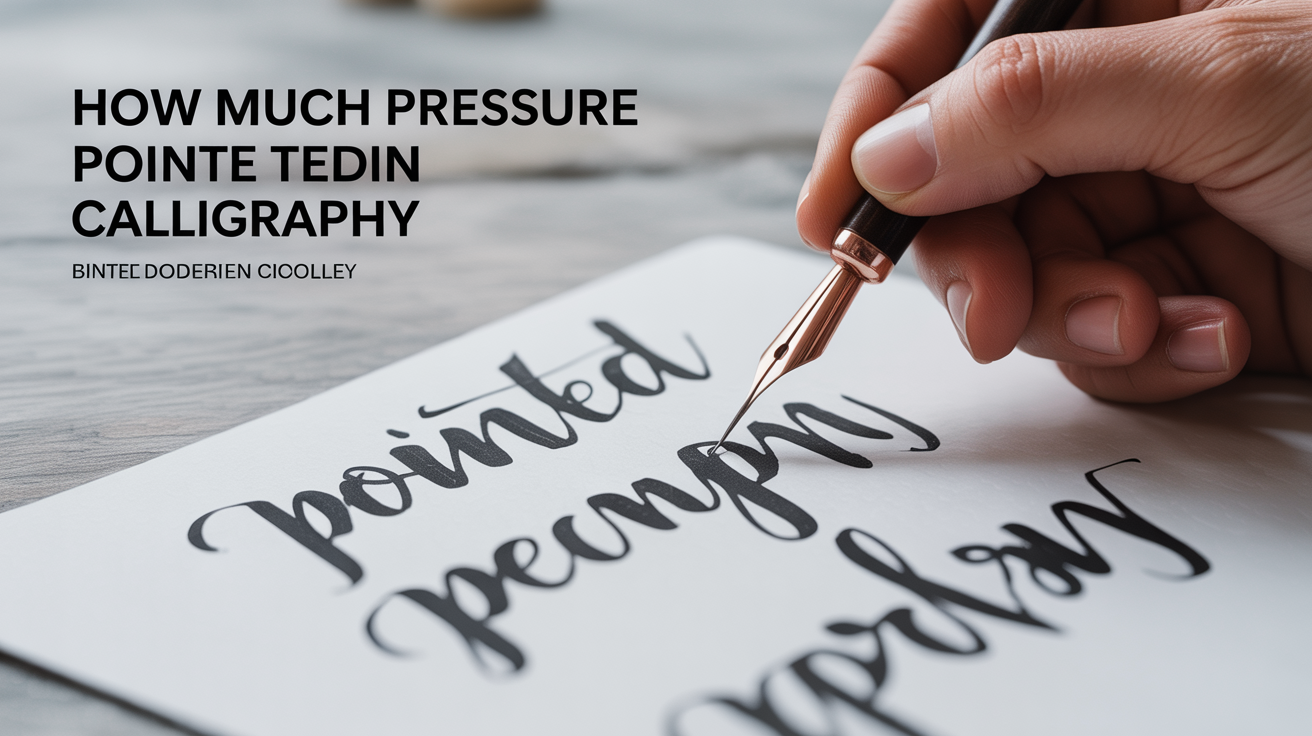
Pressure is the core skill in pointed pen calligraphy. Before you can write a single elegant letter, you need to understand one rule: light pressure on upstrokes, heavier pressure on downstrokes. That contrast is what creates the thick-and-thin look that makes pointed pen scripts look so distinctive.
This guide explains how much pressure to use, why it matters, what goes wrong when you apply too much or too little, and how to build the muscle memory to make it feel natural.
Why Pressure Controls Line Width
A pointed pen nib (the metal tip you insert into a holder and dip in ink) has two thin metal prongs called tines. At rest, the tines sit close together and produce a thin line called a hairline. When you press down, the tines spread apart, allowing more ink to flow and creating a thicker line.
This spreading is called flex. Not all nibs flex the same amount. A stiffer nib spreads only a little; a flexible nib can open quite wide with moderate pressure. As a beginner, a medium-flex nib is easier to control than an ultra-flexible one, which can splay too far and catch the paper if you push too hard.
The goal is to produce hairline upstrokes and thick downstrokes by consciously changing how hard you press. If you apply the same pressure everywhere, every stroke looks the same width, and the letterforms lose their character.
The Basic Rule: Up Light, Down Firm
Here is the simplest possible starting point:
- Upstrokes: barely touch the paper. Imagine you are dragging a feather across the page. The nib should glide, not scratch.
- Downstrokes: apply steady, gradual pressure. Increase it smoothly as you pull the stroke toward you, then ease off toward the end.
"Gradual" is the key word. Jamming the nib down suddenly can splay the tines unevenly, catch a paper fiber, or cause a blowout (a sudden blob of ink). Instead, think of easing into the pressure the way you would slowly lean onto a door rather than slamming it.
For a more detailed explanation of how this creates the thick-and-thin shapes in script alphabets, see thin upstrokes and thick downstrokes explained.
How Much Pressure Is "Enough"?
This is the question most beginners struggle with, and the honest answer is: it depends on your nib, your ink, and your paper. But here are practical starting points.
On upstrokes
Apply almost no downward pressure. Your grip should be relaxed. If you can hear the nib scratching, you are pressing too hard. The nib should whisper across the page.
On downstrokes
Start with just enough pressure to see the tines separate slightly when you look closely at the nib. For most medium-flex nibs, this is roughly the pressure you would use to write a normal signature with a ballpoint pen, but applied gradually rather than all at once. You do not need to press hard to get a visible thick stroke.
If you are using a stiffer nib, you will need a little more pressure to see any flex at all. If you are using a soft, responsive nib, even light pressure creates noticeable width.
A simple test
Press your nib against a blank sheet of paper without any ink and slowly increase pressure. Notice when the tines first start to separate. That threshold is your starting point for downstrokes. Anything beyond twice that pressure risks overflexing the nib.
Signs You Are Using Too Much Pressure
Too much pressure is the most common beginner mistake, and it shows up in specific ways:
| Symptom | What it means |
|---|---|
| Ink blobs or spills mid-stroke | Tines splayed too far, ink rushed out |
| Nib catches or tears the paper | Tines digging in, especially on upstrokes |
| Scratchy or shaky lines | Pressing hard and fighting the nib |
| Nib is permanently bent after use | Overflexed beyond its design limit |
| Strokes look "wobbly" at the ends | Pressure was released too abruptly |
If you are seeing any of these, the fix is almost always to lighten your touch. It feels counterintuitive because harder pressure seems like it should give you more control, but with a pointed pen the opposite is true.
Signs You Are Using Too Little Pressure
Under-pressure problems are less dramatic but still worth knowing:
- Hairlines on downstrokes: the thick strokes look the same as the thin ones. The letter loses contrast.
- Ink skipping: the nib tip barely contacts the page, so ink flow is inconsistent.
- Uniform, flat letterforms: everything looks like a single-weight line.
If your letters look flat and unvaried, practice deliberately adding pressure on downstrokes while consciously not adding any on upstrokes.
How to Practice Pressure Control
The most efficient way to develop pressure control is to practice isolated strokes before attempting letters. Here is a step-by-step drill sequence:
-
Load your nib with ink. Dip it fully past the vent hole, then wipe one side gently on the rim of the ink bottle to remove excess. See how to load ink onto a calligraphy nib for more detail.
-
Draw a straight downstroke. Pull the nib toward you at a 45-degree angle to the paper. Start with light pressure, gradually increase it in the middle of the stroke, then ease off at the bottom. This "swell" shape is your goal.
-
Draw a straight upstroke. Push the nib away from you with almost no pressure. The line should be hairline-thin.
-
Combine them in an oval. An oval (like a tall lowercase "o") alternates between a light upstroke on the left and a pressed downstroke on the right. This single shape teaches the full pressure cycle.
-
Repeat on a grid. Fill a page with these ovals in rows. Keep them the same size and spacing. Watch for consistency: thick on the right, thin on the left, no blobs.
-
Slow down. Speed hides bad pressure habits. Fast strokes let you skip the gradual transition. Slower practice builds cleaner muscle memory.
Expect your first attempts to look shaky. Uneven pressure at the start is completely normal. The tines catch, the ink blobs, the hairlines look ragged. That changes with repetition, not with a harder grip.
Grip, Angle, and Their Effect on Pressure
Pressure is not just about your fingers. Two other factors directly affect how much force reaches the nib:
Pen angle to the paper. If you hold the pen nearly upright (close to 90 degrees), even light finger pressure sends a lot of force straight down onto the tines. If you hold the pen at a shallow angle (closer to 30 degrees), the same finger pressure spreads more evenly and the nib flexes more smoothly. Most beginners do well starting around 45 to 55 degrees.
Grip tightness. A tight, tense grip makes it hard to modulate pressure subtly. Aim for a relaxed hold, similar to how you would hold a thin marker. The pen should feel secure but not clenched.
If pressure control feels impossible despite practicing strokes, check whether you are gripping too tightly or holding the pen too upright. Adjusting either variable often makes an immediate difference.
For more on getting started with the physical setup, see how to assemble a dip pen and insert a nib.
Building Consistent Pressure Over Time
Pressure control is a physical skill, and like any physical skill it takes time to become automatic. Here is what helps most:
- Short, frequent sessions (15 to 20 minutes a day) build muscle memory faster than long occasional ones.
- Use smooth, ink-friendly paper. Rough or absorbent paper grabs the nib and makes it harder to feel when you are pressing too hard. Smooth practice paper gives you honest feedback.
- Watch your upstrokes more than your downstrokes. Most beginners over-press on upstrokes without realizing it. Make "keep upstrokes light" your main mental focus for the first few weeks.
- Be patient with shaky lines. Shakiness at the start is not a technique problem; it is a coordination problem that resolves with practice.
Frequently Asked Questions
How do I know if I am pressing too hard on upstrokes?
If the nib catches or drags on upstrokes, you are pressing too hard. Upstrokes should feel smooth and effortless. Another sign: if ink blobs appear at the start of an upstroke, the tines were pressing into a puddle of ink on the page. Lighten your touch until upstrokes produce only a clean hairline with no drag or snagging.
Does the type of nib change how much pressure I need?
Yes, significantly. A stiff nib requires noticeably more pressure to flex than a soft one. If you are struggling to get any thick strokes, your nib may be stiffer than you expect. Try slightly more pressure on downstrokes. Conversely, a very soft nib can flex with very light pressure, which can make it hard to control. Medium-flex nibs are more forgiving for beginners.
My downstrokes look thick near the top but thin near the bottom. What am I doing wrong?
You are releasing pressure too early. The thick part of a downstroke should taper at the very end, not halfway down. Try maintaining pressure through most of the stroke and releasing it only in the final few millimeters. Practicing slow strokes helps you feel exactly when the pressure is dropping off.
Can I practice pressure with a non-dip pen first?
You can practice the physical motion of light upstrokes and heavier downstrokes with any flexible pen, including some brush pens. However, a brush pen flexes differently than a pointed dip pen nib. Practice with a brush pen can help you get comfortable with the general concept, but you will still need to adjust once you switch to a dip nib.
How long until pressure control starts to feel natural?
For most beginners, basic pressure control (producing some contrast between strokes) clicks within one to three weeks of consistent daily practice. Smooth, even control that happens without conscious thought takes longer, often two to three months of regular sessions. The transition is gradual rather than sudden. One day you notice you stopped thinking about it and the strokes just look right.