Pointed Pen
How to Load Ink Onto a Calligraphy Nib
Learn how to load ink onto a calligraphy nib correctly — how much to use, how to dip, and how to avoid blobs, skipping, and flooding.
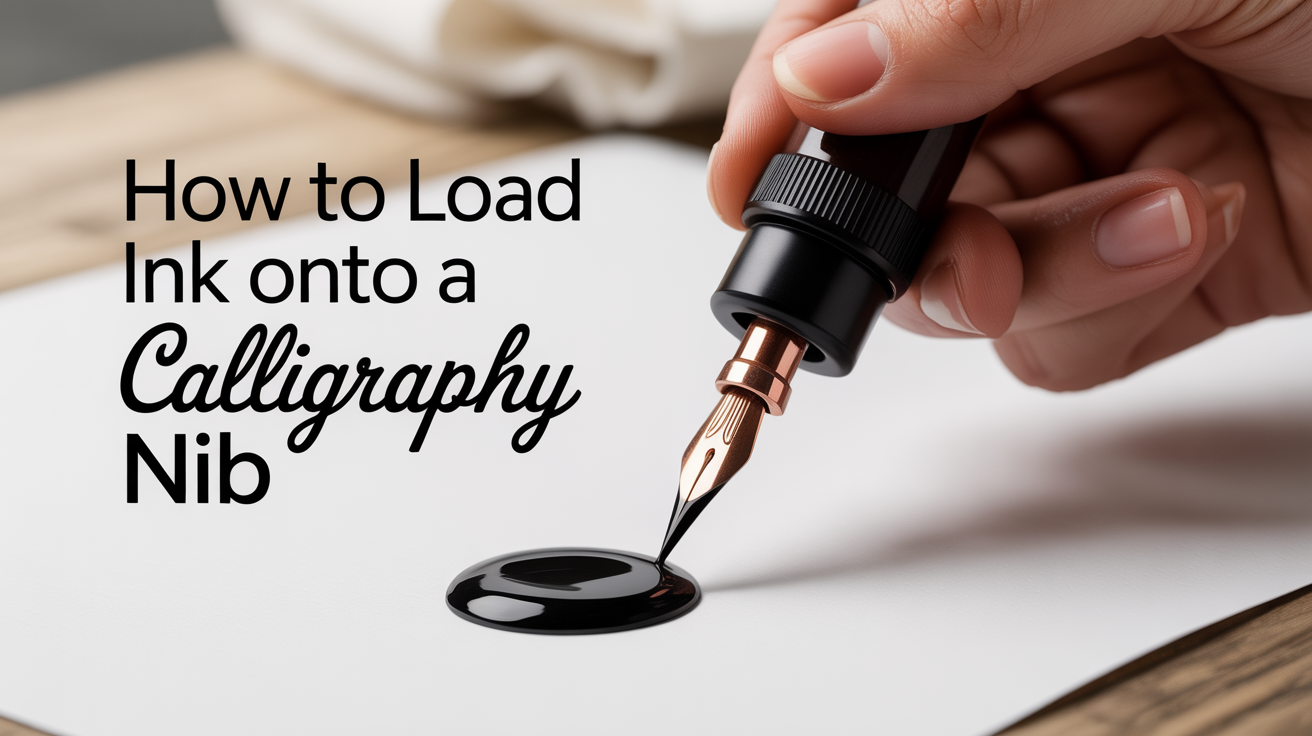
Getting ink onto your nib sounds simple, you dip it in a bottle, and you write. But this small step trips up more beginners than almost anything else. Too little ink and your strokes skip and scratch. Too much and a fat blob lands on your paper the moment you press down. A bit of understanding about how nibs hold ink goes a long way toward fixing both problems before they happen.
How a Calligraphy Nib Holds Ink
A pointed pen nib (the small metal tip that attaches to your holder) has two thin metal strips called tines. When the pen is at rest, those tines touch and the ink sits between them by surface tension, like water between two plates of glass. The tiny channel that runs from the tip toward the eye (the oval hole near the center) helps regulate how fast the ink flows down to your lettering.
Some nibs also have a reservoir, a small clip or secondary piece of metal attached to the underside of the nib that holds a larger puddle of ink closer to the tip. If your nib has one built in, it will naturally hold more ink per dip. If it doesn't, you'll be re-dipping more often, which is totally normal.
Understanding this changes how you think about loading ink. You're not just coating the nib, you're filling a small system so that ink flows steadily to the paper without dumping all at once.
Preparing Your Nib Before the First Dip
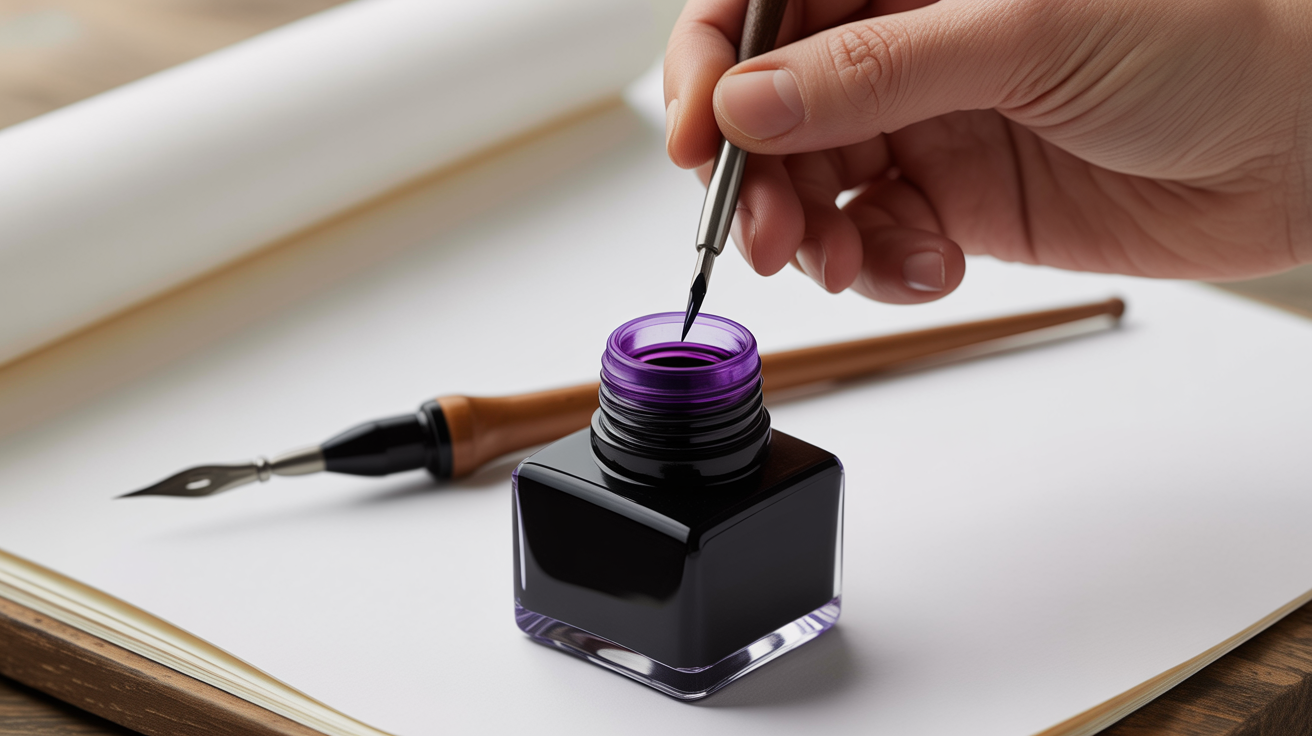
Brand-new nibs come coated with a thin protective oil from the manufacturer. If you skip this step, ink will bead off the metal like water off a waxed car.
Remove the factory coating before you load any ink:
- Hold the nib briefly in a flame from a match or lighter for about two seconds, then let it cool completely. Don't leave it in the flame or you'll ruin the temper of the metal.
- Alternatively, poke the nib into a raw potato for 10–15 minutes, then rinse.
- Or scrub gently with a soft toothbrush and a tiny drop of dish soap, rinse well, and dry.
After this prep, water and ink should sheet across the nib rather than bead. If you see the ink still pulling away from parts of the metal, the coating isn't fully gone, repeat the cleaning step.
For more on setting up your pen before this point, see how to assemble a dip pen and insert a nib.
How to Dip a Calligraphy Pen in Ink
Here's the actual dipping process, step by step:
-
Open your ink and set it on a stable surface. A bottle that tips easily can ruin a practice session fast. Some calligraphers pour a small amount into a shallow dish or bottle cap, this makes the dipping angle easier to control.
-
Hold your pen at a low angle. Dip the nib into the ink at roughly 30–45 degrees, not straight down. This fills the channel and the space between the tines without submerging the whole nib body.
-
Submerge only the nib tip, not the collar or the holder. You want ink covering roughly the bottom half of the nib, up to or just past the oval hole in the center. Going deeper usually means more ink than you need.
-
Pull the nib out slowly and let it pause at the rim of the bottle for a second. The rim catches any hanging droplet before it falls onto your paper.
-
Wipe once, lightly, on the inside edge of the bottle or on a scrap of paper. This removes the excess on the underside without stripping all the ink away. If you wipe too hard, you'll have too little and the nib will skip on the first stroke.
-
Test on a scrap before going to your good paper. Draw a short downstroke (pressing slightly) and an upstroke (barely any pressure). If both flow, you're loaded correctly.
How Much Ink on a Nib Is Right
This is the question beginners ask most often, and the honest answer is: a little less than you think.
A well-loaded nib should look like it has a small, tidy puddle of ink sitting in the channel, not a quivering blob hanging off the tip. If you can see ink threatening to drip, there's too much. If the tip looks almost dry, there's too little.
A practical way to calibrate: do a few test strokes on scrap paper after each dip and notice what the ink looks like on the nib at that moment. After a stroke or two, the amount naturally reduces to a working level. Some beginners dip, wipe, and then do two or three strokes on a test scrap before moving to their good paper, that short warm-up uses the excess without waste.
Signs you have too much ink:
- A blob forms before you even touch paper
- The first stroke floods and feathers
- Ink pools inside thin upstrokes
Signs you have too little ink:
- The nib skips or scratches on the first stroke
- Lines are faint or broken
- You have to press harder to get any mark at all (pressing harder to compensate is a common mistake that damages nibs over time)
Consistent loading is a feel you develop after a few sessions. Early on, err on the side of a little less, re-dip more often, and keep scrap paper handy.
Troubleshooting Common Loading Problems
| Problem | Likely cause | Fix |
|---|---|---|
| Ink beads off the nib | Factory oil still on nib | Clean nib (flame, potato, or dish soap) |
| Huge blob on the first stroke | Too much ink | Wipe more carefully at the bottle rim; test on scrap |
| Nib skips right away | Too little ink, or ink too dry | Dip a touch deeper; add a drop of water to gummy ink |
| Ink stops flowing mid-word | Nib dry, or ink gummed in channel | Re-dip; rinse nib if ink has dried in the tines |
| Ink floods on pressure strokes | Ink too thin, or too much loaded | Use a slightly thicker ink; load less per dip |
| Scratching even with ink loaded | Nib tip damaged or crossed tines | Inspect under magnification; replace if bent |
A note on pressure: the thick strokes in pointed pen calligraphy come from gently spreading the tines apart on downstrokes. The upstrokes use almost no pressure. If you're pressing hard to get any mark, the problem is almost always ink supply, not technique. For more detail on this, see thin upstrokes and thick downstrokes explained and how much pressure to use in pointed pen calligraphy.
Keeping Your Nib Clean While You Work
Ink dries on nibs faster than most beginners expect, especially with India ink or gum-arabic-based inks in a warm or dry room. A nib that's been sitting for even 10–15 minutes may have dried ink partially blocking the tines.
Keep a small cup of water and a lint-free cloth or paper towel at your workspace. Every few dips, give the nib a quick rinse in the water and wipe it dry before re-loading. This takes about five seconds and prevents the gradual buildup that causes skipping and scratching later in a session.
At the end of a session, rinse the nib thoroughly, wipe it dry, and store it separately from the holder. Leaving ink to dry in the tines overnight can pit the metal over time and shorten the nib's life.
Frequently Asked Questions
Can I use any ink for dip pen calligraphy?
Not all inks work the same way. Inks made for dip pens (often labeled calligraphy ink, India ink, or sumi ink) are formulated for the right flow and adhesion. Fountain pen inks are usually too thin and flow too fast, causing flooding. Acrylic or heavy pigmented inks may dry in the tines mid-session. Start with an ink specifically designed for pointed pen work and experiment from there.
Why does my ink dry on the nib between letters?
This usually means the room is dry or warm, or the ink has a lot of gum arabic (a thickener) in it. Work faster if you can, keep the nib moving, and rinse more often. You can also thin the ink slightly with a drop or two of distilled water, which slows drying time.
How often should I re-dip?
It depends on the nib, the ink, and the letter size. A general starting point is every 3–5 words for most standard nibs. As you get a feel for when the ink is running thin (strokes start to look lighter or thinner), you'll naturally develop a re-dipping rhythm.
My nib seems to hold almost no ink at all. What's wrong?
First, check that the factory coating is fully removed. If you've already done that, look at whether the tines are sitting slightly apart instead of touching, a sprung nib won't hold ink properly. You can also try pressing the nib firmly but gently onto a folded cloth to encourage the tines to close, but if the damage is significant, it's often easier to just swap in a fresh nib.
Is there a difference in how you load ink for different nib sizes?
Yes, in practice. Larger, more flexible nibs hold more ink and may need a slightly bigger load. Fine or stiff nibs hold less and need a lighter touch. The same principles apply, submerge the right amount, test on scrap, wipe excess, but the exact feel will shift with each nib style you try. Treat every new nib as a short learning curve and you'll calibrate quickly.